
AI-driven tools are becoming one of the most effective ways to capture qualified leads, deliver personalized value to prospects, and demonstrate a company’s expertise directly on its website. With the right structure, these tools can solve real problems for users while supporting scalable, data-rich lead generation.
Below are the core components and design approaches companies can use when developing AI-powered tools for lead qualification.
Standardizing Core Elements Across AI Tools
When deploying multiple AI-driven qualification or assessment tools, standardizing certain reusable “blocks” can streamline development, ensure consistent scoring, and enhance data interoperability.
- User Identity & Firmographic Intake Block: Collects foundational business information such as company name or domain, industry, size, location, and regulatory context. Ensures every tool begins with a consistent understanding of the user’s organizational background.
- Role & Persona Block: Captures who the user is relative to their needs—for example Quality Manager, CISO, EHS Director, Procurement Lead, or Consultant. This enables more personalized guidance and scoring.
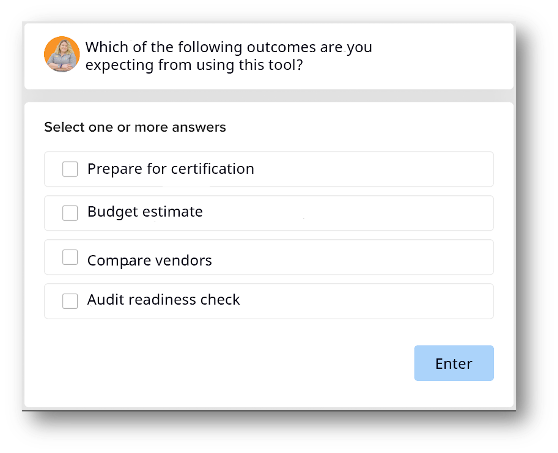
- Goals / Intent / Outcomes Block: Identifies what the user hopes to accomplish, such as preparing for an audit, estimating a budget, assessing readiness, or comparing vendors. Clear intent capture strengthens lead scoring and personalization.
- Shared Database Structure: Establishes a common data model so all tools can share information, sync with CRMs or MAPs, support cross-tool analytics, and reduce engineering overhead.
- Centralized Scoring & Risk/Readiness Engine: Converts behavioral, contextual, and response inputs into standardized scores—lead qualification, risk, readiness, or maturity—allowing consistent comparison across tools and over time.
- Recommendation & Next-Step Block: Translates scores and detected patterns into concrete next actions, delivered as prioritized recommendations, resource links, timelines, or calls-to-action.
- Data Capture & Session State Block: Manages user identity, saves partial progress, recognizes returning users, and preserves session continuity to improve completion rates and re-engagement.
- Reporting & Export Block: Presents results in a polished format, enabling users to download, export, or share summaries that they can incorporate into internal workflows or team discussions.
Training AI With Subject Matter Expertise

General-purpose AI models often contain errors inherited from unvetted web data. To build reliable, high-value tools, companies must layer domain expertise and oversight on top of the base model.
- Sponsor-Led Prompt Engineering: Continuous prompt refinement allows organizations to improve accuracy, correct AI misunderstandings, incorporate new knowledge, and adapt the tool without coding expertise.
- Sales-Friendly Prompt Strategy: Prompts can ethically guide users toward the sponsor’s offerings by highlighting strengths, suggesting relevant products/services, and delivering balanced comparisons that resemble third-party reviews while clarifying the sponsor’s advantages.
- Transforming AI Into a Trusted Advisor: By embedding curated expertise, enforcing vetted knowledge, and iterating prompt structures, companies ensure that tools deliver trustworthy guidance, reflect the sponsor’s positioning, and adapt to regulatory or market changes.